
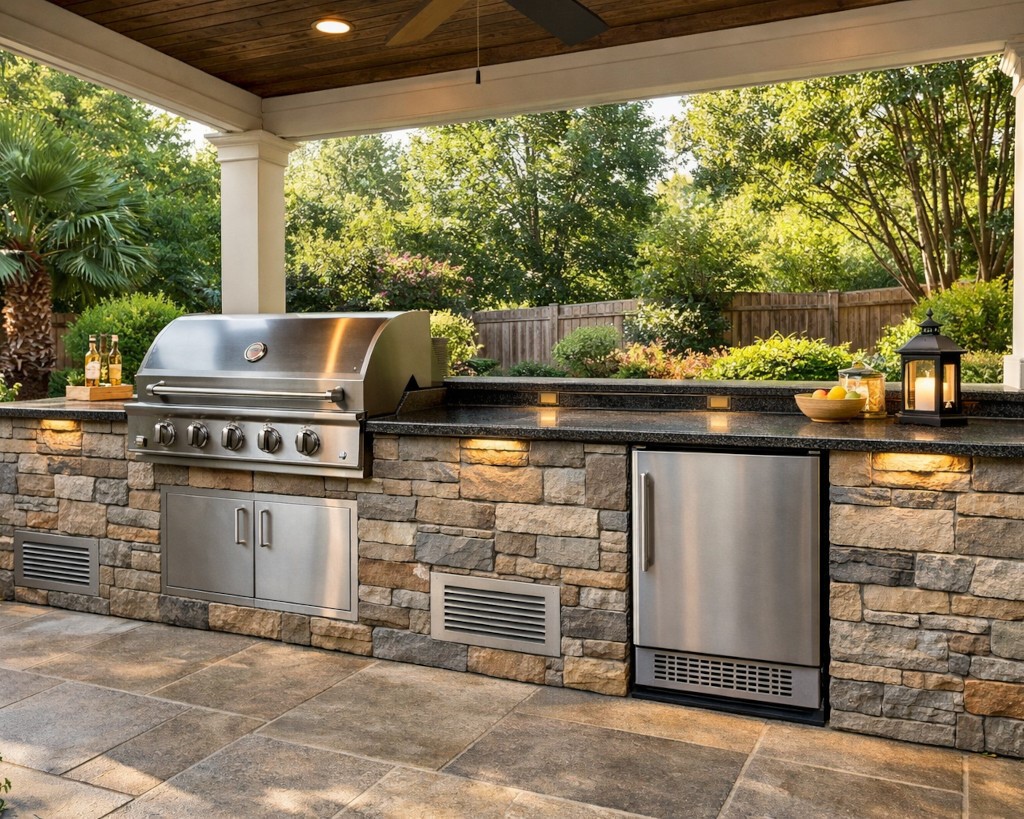
Key Takeaways
- Outdoor appliances need proper ventilation and moisture protection to last in Atlanta’s humid climate.
- Metal framing and cement board typically outperform traditional lumber and plywood in outdoor kitchens.
- Clearance and airflow are essential for grills and refrigeration units.
- Weather-resistant finishes help protect your outdoor kitchen investment over time.
- Professional servicing is necessary when gas or refrigeration systems are involved.
A few years ago, I helped a friend upgrade his backyard with what looked like a simple grill station. By late summer, the setup looked impressive. By the following spring, the cabinet doors were warped, the mini refrigerator showed signs of moisture damage, and the wiring needed repair.
That project reinforced something I’ve learned repeatedly while building outdoor kitchens in Atlanta: an appliance enclosure isn’t optional. It’s essential.
If you’re building or upgrading an outdoor kitchen in Georgia’s humid climate, this guide explains how I design durable, weather-resistant DIY appliance enclosures built to perform for years, not just a single season.
Why Outdoor Kitchen Appliances Need Protection
Outdoor kitchens have become a defining feature of modern home design. As highlighted in our feature on evolving home layouts, homeowners are prioritizing functional, lifestyle-driven spaces. Outdoor cooking spaces are a major part of that shift.
Unlike indoor kitchens, outdoor appliances face constant exposure to rain, humidity, fluctuating temperatures, direct sunlight, and airborne debris. Even high-end stainless steel units can corrode prematurely if airflow and drainage aren’t properly planned.
I’ve seen homeowners assume that a vinyl cover provides enough protection. It doesn’t. Without a properly constructed enclosure, moisture finds its way into framing, electrical components, and cabinet interiors. Over time, that leads to swollen materials, rust, compressor strain, and costly repairs.
In Atlanta, where summer humidity is relentless and storms can be intense, durability has to be planned rather than assumed.
Start With Smart Layout Planning
Before cutting a single board or installing a stud, I start with layout planning. Outdoor appliances usually require more clearance than indoor units, especially when ventilation is involved.
Built-in grills typically require clearance on the sides and rear for heat dissipation. Refrigeration units need airflow behind the cabinet structure. Pizza ovens may demand heat-resistant backing. Manufacturer specifications should always guide the layout.
I map appliance dimensions, confirm ventilation spacing, evaluate gas and electrical access, and consider drainage slope before framing begins. Outdoor kitchens sit exposed to water runoff, so ensuring that the base is slightly elevated or sloped prevents standing water from pooling beneath cabinets.
Measuring carefully at this stage prevents expensive adjustments later.
Choosing the Right Framing Material
The framing system largely determines whether an enclosure lasts two years or ten.
Pressure-treated lumber is often chosen for budget-conscious builds or covered patios. It’s affordable and easy to work with, but even treated lumber can warp over time, especially in humid regions like Atlanta. Proper sealing is essential if you go this route.
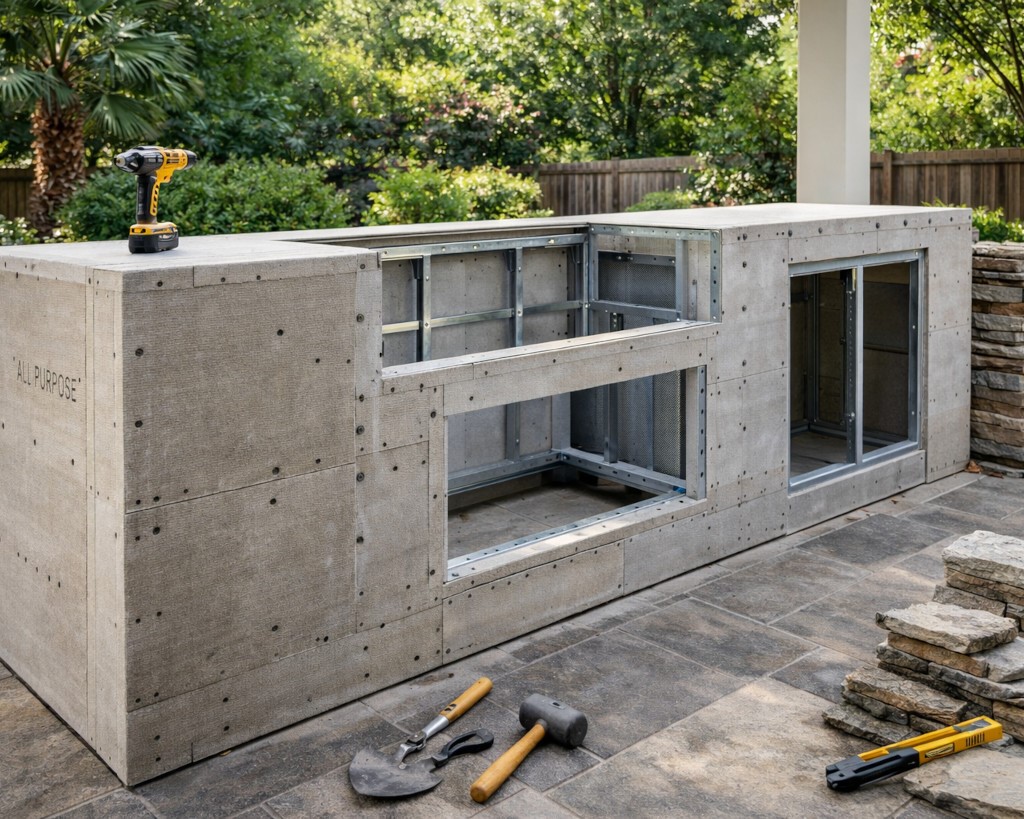
Personally, I prefer galvanized metal stud framing for fully exposed outdoor kitchens. It resists rot, maintains straight lines, and handles moisture better over time. While it requires metal-cutting tools and slightly higher upfront cost, the long-term durability makes it worthwhile in climates with heavy rain and high humidity.
Outdoor builds should assume that moisture will eventually test every seam.
Why Cement Board Outperforms Plywood
I no longer use standard plywood for outdoor enclosures.
Even exterior-grade plywood gradually absorbs moisture over time. Paint can slow absorption, but it doesn’t eliminate the problem. Cement board, fiber cement panels, or exterior-rated sheathing provide a much more stable base. These materials resist swelling and delamination, even under fluctuating moisture conditions.
Securing panels with corrosion-resistant screws further strengthens longevity. Hardware selection matters just as much as structural materials.
In Atlanta’s climate, choosing the right sheathing can be the difference between a cabinet that lasts five years and one that fails in two.
Ventilation Is Critical — Especially for Refrigeration
One of the most common DIY mistakes involves inadequate airflow.
Outdoor kitchen appliances generate heat, and when that heat becomes trapped inside sealed cabinetry, the appliance’s lifespan drops significantly. Refrigeration compressors are especially vulnerable.
Proper ventilation involves installing vent panels near grills, maintaining rear gaps for airflow, and avoiding airtight cabinet designs. Stainless steel vent covers are both functional and durable.
If you’re unsure about ventilation requirements, consult the manufacturer’s manual before building the enclosure. Guesswork here can be costly.
And while I encourage DIY construction, I never recommend guessing when it comes to gas lines or refrigeration systems. For complex mechanical concerns, consulting professionals experienced in commercial appliance repair in Atlanta ensures that equipment operates safely and efficiently.
Electrical hazards simply aren’t worth the risk.
Finishes That Withstand Atlanta Weather
Once framing and ventilation are addressed, finishing materials play a major role in durability.
Your enclosure must withstand UV exposure, heavy rain, and temperature swings. I’ve had success with stone veneer for its durability and timeless appearance. Stucco can create a clean Mediterranean aesthetic but requires proper sealing. Outdoor-rated tile offers a contemporary look and easy maintenance when installed over waterproof backing.
Every finish should be sealed thoroughly. Moisture infiltration often begins at unsealed seams rather than large openings.
In Georgia’s climate, outdoor-rated materials are essential.
Countertops Designed for the Outdoors
Countertops often receive less attention than framing, but they are just as important for long-term durability.
Standard laminate and untreated butcher block are poor choices for outdoor kitchens. Heat and moisture quickly compromise them.
Granite remains one of my preferred options. When properly sealed, it handles heat and humidity well. Concrete offers durability and a custom aesthetic. Outdoor-rated quartz and porcelain slabs are also viable, provided installation follows manufacturer guidelines.
Material selection should reflect long-term exposure, not short-term appearance.
Designing Specifically for Atlanta’s Climate
Atlanta’s climate requires deliberate planning when building outdoor kitchens. Summers are hot and humid. Storms can arrive quickly. Moisture is constant.
Over the years, I’ve seen outdoor kitchen enclosures fail prematurely because they weren’t designed for regional conditions. To counteract humidity and rain exposure, I elevate framing slightly off concrete slabs, seal all joints carefully, install drip edges, and use rust-resistant hardware.
Water eventually finds its way into most outdoor structures. The goal is to prevent it from staying.
When moisture protection is treated as a primary design element rather than an afterthought, the enclosure performs significantly better over time.
Humidity doesn’t forgive shortcuts.
Common Mistakes I Encounter
The most frequent problems involve poor drainage planning and the failure to meet clearance requirements. Water pooling at the base of cabinets accelerates rot and corrosion. Overheating appliances due to tight framing shortens operational lifespan.
Another recurring issue is the use of indoor materials outdoors. Interior plywood and MDF fail quickly in humid environments. Outdoor builds require outdoor-rated materials without exception.
Finally, some homeowners hesitate to involve professionals when mechanical systems are involved. DIY construction is rewarding, but gas lines, refrigeration systems, and commercial-grade equipment require technical precision. Knowing when to step back protects both safety and investment.
What Building Outdoor Enclosures Has Taught Me
After multiple projects across the Atlanta area, a few principles consistently prove true.
Always prioritize durability rather than cutting corners. Leave access panels for maintenance. Plan ventilation before aesthetics. Think five years ahead rather than one season ahead.
One enclosure I built five years ago still looks new because airflow and moisture barriers were prioritized from the start. The difference wasn’t the budget, but the planning.
Long-term durability often comes from details most people never notice.
FAQ: DIY Outdoor Kitchen Appliance Enclosures in Atlanta
How much does it cost to build an outdoor appliance enclosure?
Costs vary based on materials and finishes. A basic enclosure can range from $800 to $1,500, while high-end materials and stone finishes can exceed $3,000.
Can I build an outdoor kitchen enclosure without a roof?
Yes, but you must use weather-resistant materials and apply proper sealing techniques to protect against direct exposure.
Do outdoor refrigerators require ventilation?
Absolutely. Without adequate airflow, compressors overheat and fail prematurely.
What framing material lasts longest in Atlanta?
Galvanized metal framing paired with cement board performs exceptionally well in humid climates.
Should I repair outdoor appliances myself?
Cosmetic fixes are manageable, but gas, refrigeration, and electrical issues should be handled by qualified professionals.
Final Thoughts
A DIY outdoor kitchen appliance enclosure is not just about appearance. It’s about protecting equipment, preserving structural integrity, and ensuring long-term performance in Atlanta’s climate.
When I approach these builds, I think about how the space will function years from now. Materials must resist moisture. Ventilation must protect performance. Finishes must endure exposure.
Build it once, build it correctly, and you won’t have to rebuild it later.
That difference separates a seasonal project from a long-term investment.
 Lorenzo Armstronginer is the kind of writer who genuinely cannot publish something without checking it twice. Maybe three times. They came to home design updates through years of hands-on work rather than theory, which means the things they writes about — Home Design Updates, Home Improvement Strategies, Gardening Tips and Ideas, among other areas — are things they has actually tested, questioned, and revised opinions on more than once.
That shows in the work. Lorenzo's pieces tend to go a level deeper than most. Not in a way that becomes unreadable, but in a way that makes you realize you'd been missing something important. They has a habit of finding the detail that everybody else glosses over and making it the center of the story — which sounds simple, but takes a rare combination of curiosity and patience to pull off consistently. The writing never feels rushed. It feels like someone who sat with the subject long enough to actually understand it.
Outside of specific topics, what Lorenzo cares about most is whether the reader walks away with something useful. Not impressed. Not entertained. Useful. That's a harder bar to clear than it sounds, and they clears it more often than not — which is why readers tend to remember Lorenzo's articles long after they've forgotten the headline.
Lorenzo Armstronginer is the kind of writer who genuinely cannot publish something without checking it twice. Maybe three times. They came to home design updates through years of hands-on work rather than theory, which means the things they writes about — Home Design Updates, Home Improvement Strategies, Gardening Tips and Ideas, among other areas — are things they has actually tested, questioned, and revised opinions on more than once.
That shows in the work. Lorenzo's pieces tend to go a level deeper than most. Not in a way that becomes unreadable, but in a way that makes you realize you'd been missing something important. They has a habit of finding the detail that everybody else glosses over and making it the center of the story — which sounds simple, but takes a rare combination of curiosity and patience to pull off consistently. The writing never feels rushed. It feels like someone who sat with the subject long enough to actually understand it.
Outside of specific topics, what Lorenzo cares about most is whether the reader walks away with something useful. Not impressed. Not entertained. Useful. That's a harder bar to clear than it sounds, and they clears it more often than not — which is why readers tend to remember Lorenzo's articles long after they've forgotten the headline.